
Expert care tailored to your rehabilitation needs
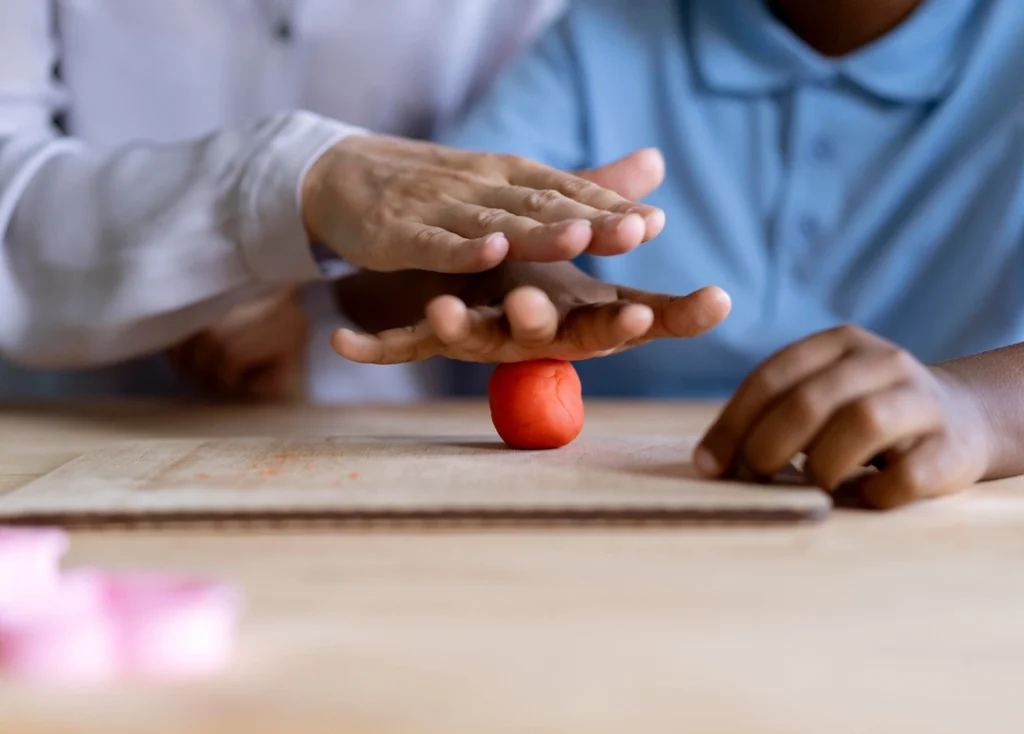
At Ability Therapy Place, our hand rehabilitation program for stroke survivors is designed to help you regain strength, movement, and function in your hands and upper limbs. We use evidence-based techniques such as therapeutic exercises, task-specific training, and adaptive strategies to improve grip, coordination, dexterity, and daily living skills. Our goal is to help you perform everyday activities independently, from eating and dressing to writing and using tools, while reducing pain, stiffness, and muscle weakness. Whether you are recovering from a recent stroke or dealing with long-term hand impairments, our clinic provides personalized therapy plans to support your journey to full functional recovery.

Our “Back to Work After Stroke” program helps stroke survivors regain independence and confidence as they return to their professional life. We focus not only on upper limb function and coordination but also on mobility, walking (gait), and safe transfers, ensuring you can move around your workplace safely and efficiently.
Through personalized therapy plans, task-specific exercises, and adaptive strategies, we help you manage fatigue, pain, and physical limitations while performing work-related activities. Our program also provides ergonomic guidance to prevent strain and promote long-term wellness.
Whether your job involves manual tasks, walking around the office, climbing stairs, or using equipment, we help you restore functional independence, improve stamina, and rebuild confidence. Our ultimate goal is to ensure that stroke survivors can successfully transition back to work, maintain career performance, and enjoy a higher quality of life.

Our Dominant Hand Transfer Skills training supports individuals who have experienced weakness, paralysis, or loss of function in their dominant hand due to stroke or neurological injury. This program focuses on helping clients safely and effectively use their stronger or less-affected hand to perform everyday tasks.
We train clients in hand-to-hand transfer techniques, object handling, and adaptive movement strategies to improve independence in activities such as feeding, dressing, grooming, writing, and workplace tasks. Therapy also addresses coordination, grip strength, and functional control, ensuring smooth and safe task performance.
This service is ideal for individuals adjusting to changes in hand function and aiming to remain independent at home, work, and in the community, while reducing frustration and reliance on caregivers.
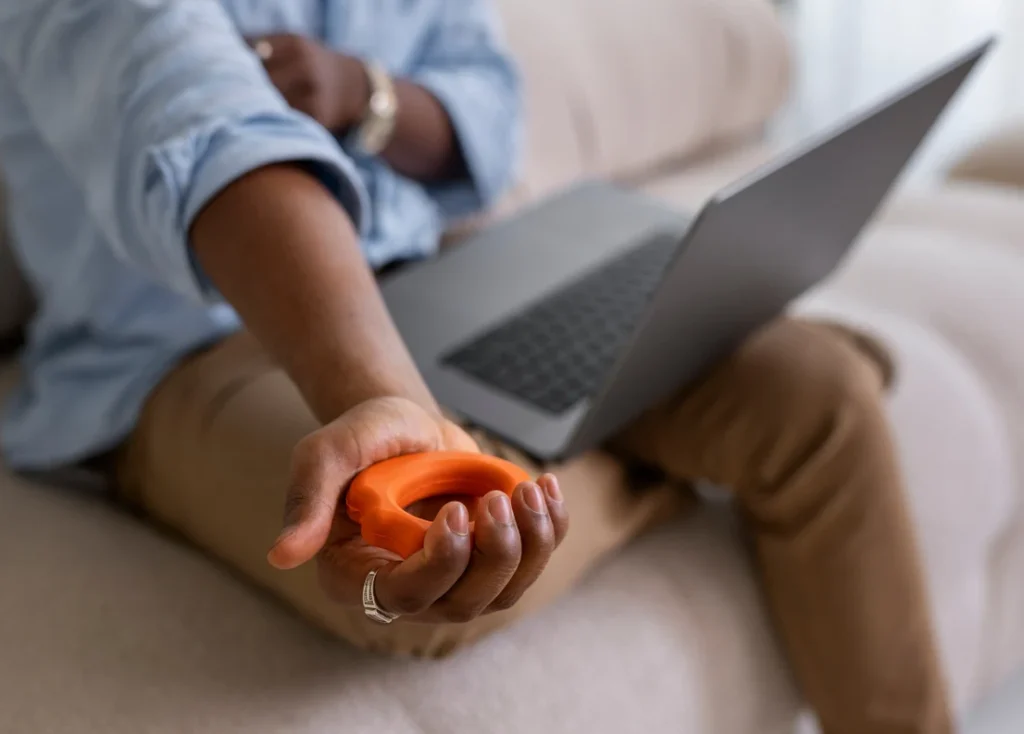
Constraint-Induced Hand Movement Therapy (CIMT) is a specialized rehabilitation approach designed to help individuals recover movement and function in a weak or affected hand, especially after a stroke or brain injury. This therapy works by restricting the stronger hand and encouraging active use of the weaker hand, helping the brain re-learn movement and improve control.
At Ability Therapy Place, CIMT focuses on repetitive, task-specific activities that improve hand strength, coordination, grip, and fine motor skills. Clients are guided through structured activities such as grasping, releasing, reaching, and manipulating objects, all tailored to real-life tasks like feeding, dressing, writing, and work activities.
This therapy is ideal for individuals experiencing learned non-use of the affected hand and aims to promote functional recovery, independence in daily activities, and long-term use of the weaker hand in everyday life.
We specialize in custom-fabricated splints tailored to individual needs, supporting recovery, function, and comfort after injury, surgery, or neurological conditions.
We use this splint in maintaining the hand and wrist in a functional resting position. It helps reduce muscle tightness, spasticity, pain, and joint stiffness, especially after stroke or neurological injury, and is often applied during rest or at night.
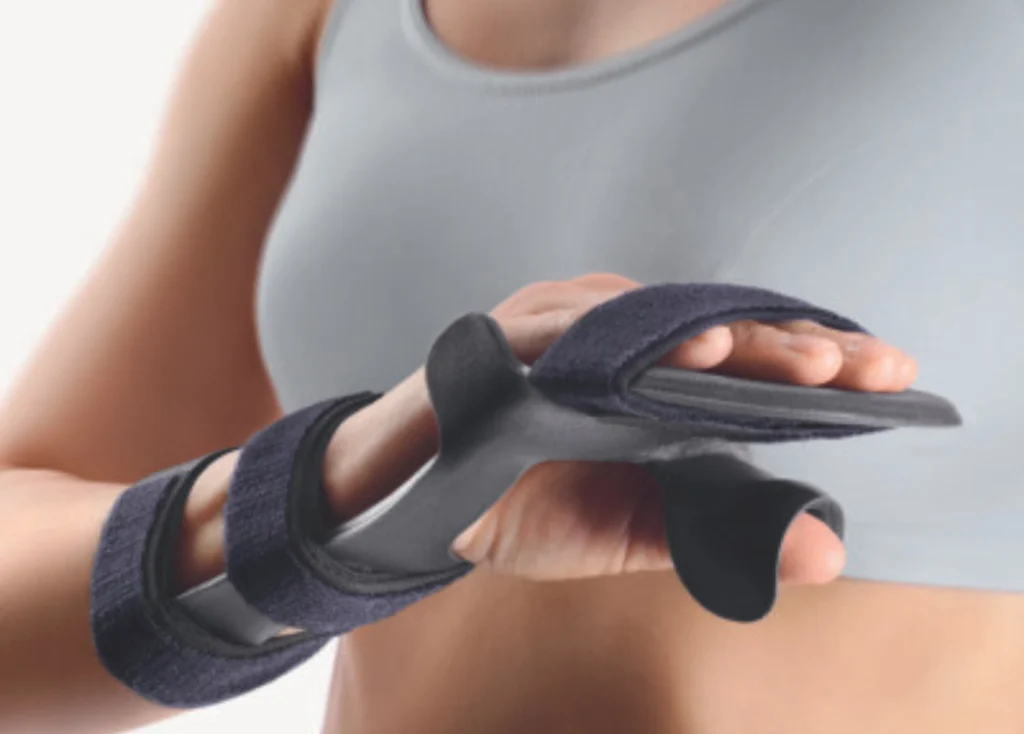
We use this splint in supporting the wrist in an extended position to improve hand function and grip strength. It is commonly applied in cases of wrist weakness, nerve injuries, carpal tunnel syndrome, and post-stroke rehabilitation.
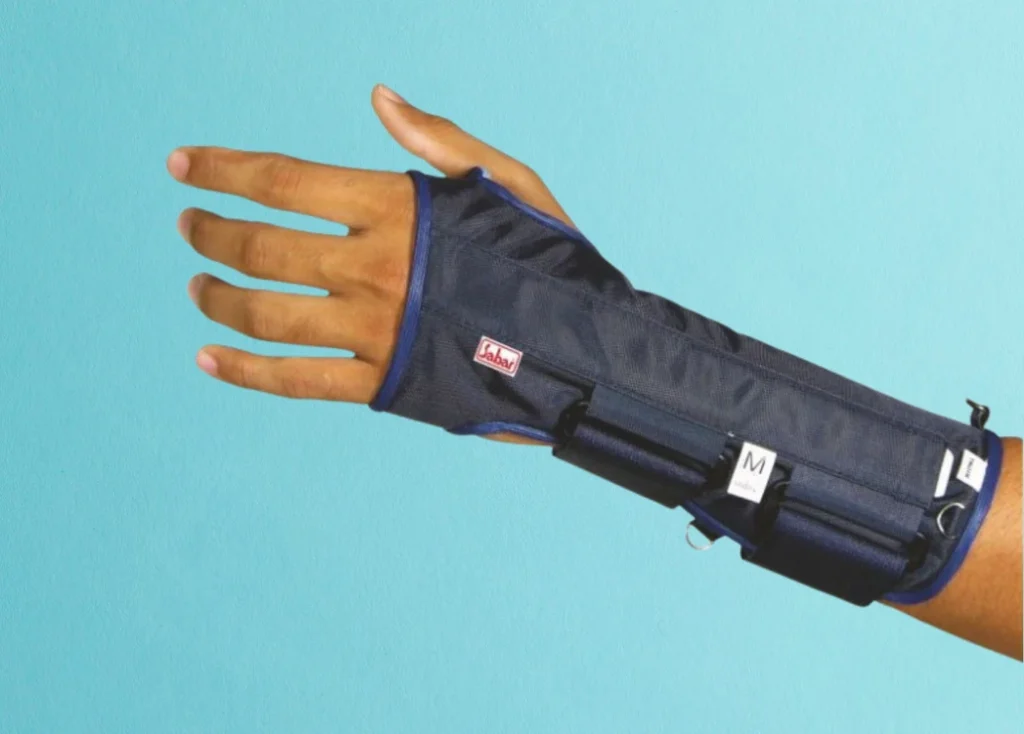
We use this splint in assisting active finger extension while allowing controlled movement. It is applied in cases of finger stiffness, weakness, or spasticity to improve finger coordination, functional reach, and hand use during daily activities.
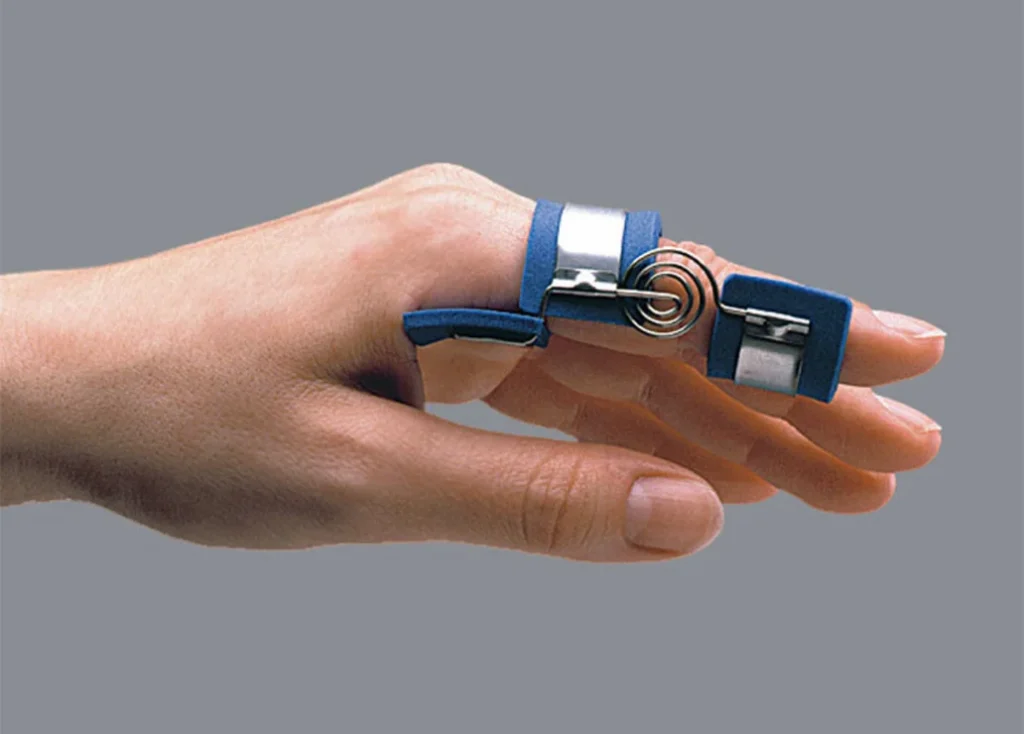
We use this splint in protecting healing structures after tendon repairs or hand surgery. It allows safe, guided movement while preventing overstretching and supporting proper recovery.
We use this splint in stabilizing the thumb and wrist to reduce pain and inflammation while promoting proper alignment. It is applied in cases of thumb injuries, arthritis, ligament injuries, and post-stroke thumb instability.
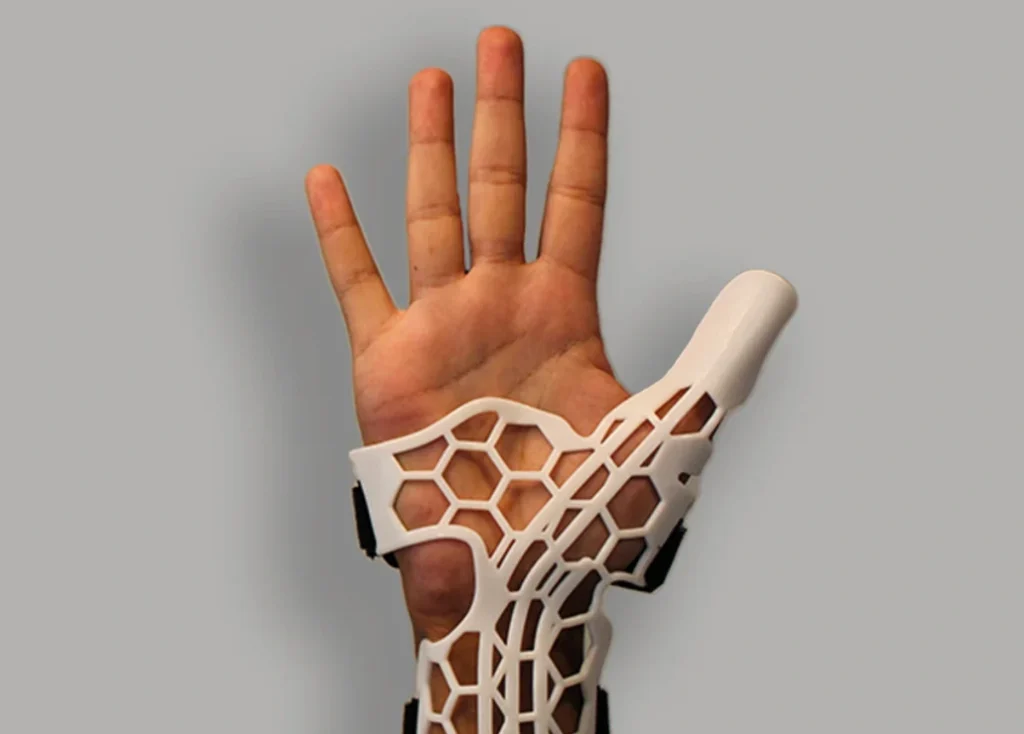
We use this splint in supporting the ring and little fingers to maintain proper alignment during healing. It is applied in cases of fractures, soft tissue injuries, and ulnar nerve-related conditions, helping restore hand stability and function.
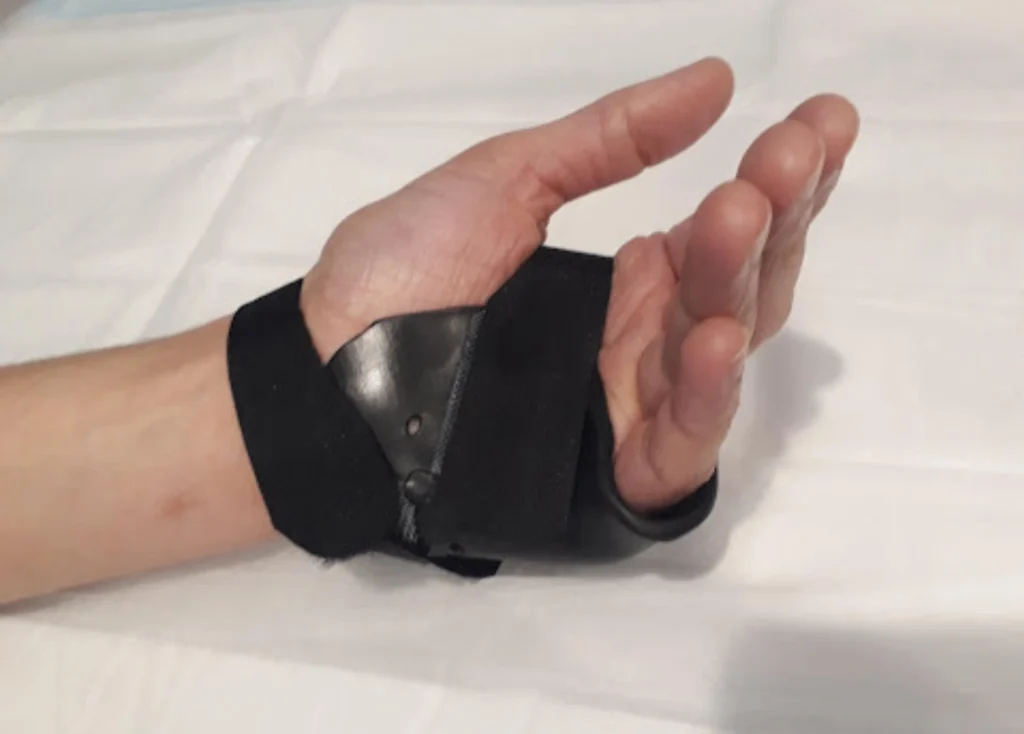
Our hand injury rehabilitation program for tendon grafts focuses on restoring hand function following tendon reconstruction surgery. We support individuals recovering from hand trauma, tendon ruptures, or surgical tendon graft procedures to regain safe movement, strength, and functional use of the hand.
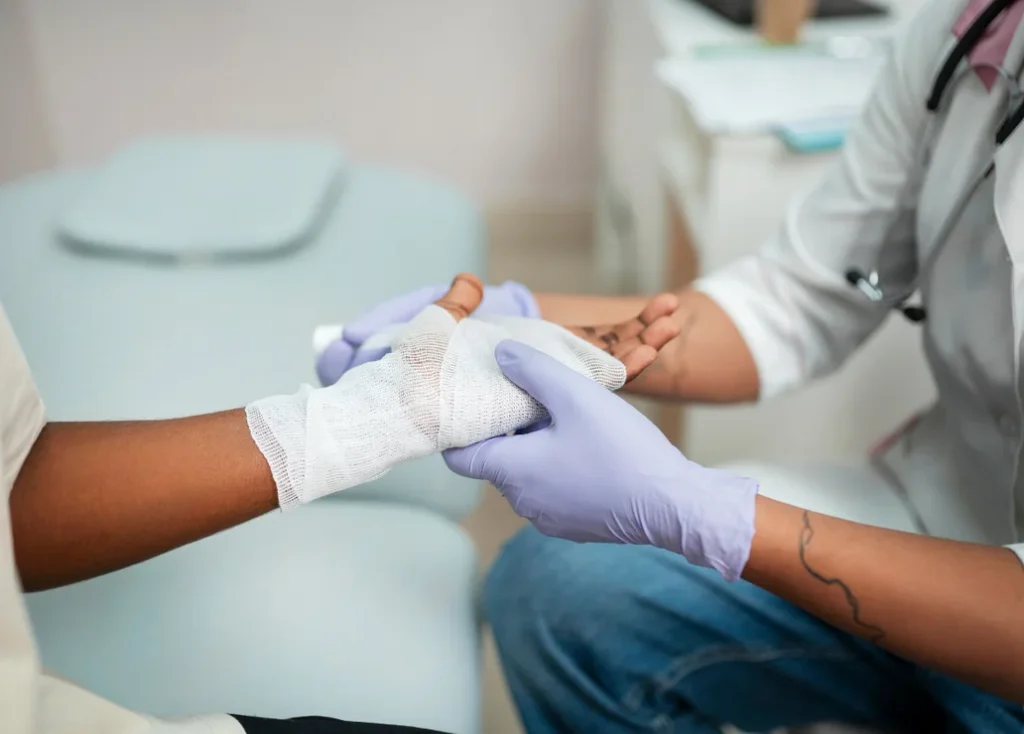
We guide clients through structured rehabilitation protocols that promote controlled movement, tendon healing, and prevention of stiffness or re-injury. Therapy focuses on improving finger and wrist mobility, grip strength, coordination, and hand control, while supporting a gradual return to daily activities such as grasping, lifting, writing, and work-related tasks.
Rehabilitation is tailored to each stage of healing, ensuring protection of the repaired tendon while progressively restoring hand endurance, dexterity, and functional independence at home, work, and in the community.
Our hand injury rehabilitation program for tendon injuries of the hand focuses on restoring movement, strength, and functional use following tendon damage caused by trauma, overuse, or surgery. We support individuals with both flexor and extensor tendon injuries to regain safe and effective hand function.
Rehabilitation also emphasizes functional hand use in daily activities such as grasping, lifting, writing, self-care, and work-related tasks. Our goal is to help clients return to meaningful activities with improved hand function, confidence, and long-term joint and tendon health.
Our hand injury rehabilitation program for sports-related hand injuries supports individuals recovering from injuries sustained during physical activity, training, or competitive sports. We work with clients experiencing hand and finger injuries such as ligament strains, tendon injuries, fractures, and joint instability.
Rehabilitation focuses on restoring hand strength, flexibility, coordination, and endurance while protecting injured structures during healing. We guide clients through progressive exercises and functional training to improve grip strength, reaction time, and hand control required for sports and daily activities.
Therapy also addresses safe return to sport by improving joint stability, movement efficiency, and injury prevention strategies. Our goal is to help individuals return to sports participation with reduced risk of re-injury and improved hand performance.
Our hand injury rehabilitation program for nerve injuries of the hand supports individuals experiencing reduced sensation, weakness, or loss of hand function due to nerve damage. These injuries may result from trauma, compression, surgery, or medical conditions affecting the nerves of the hand and wrist.
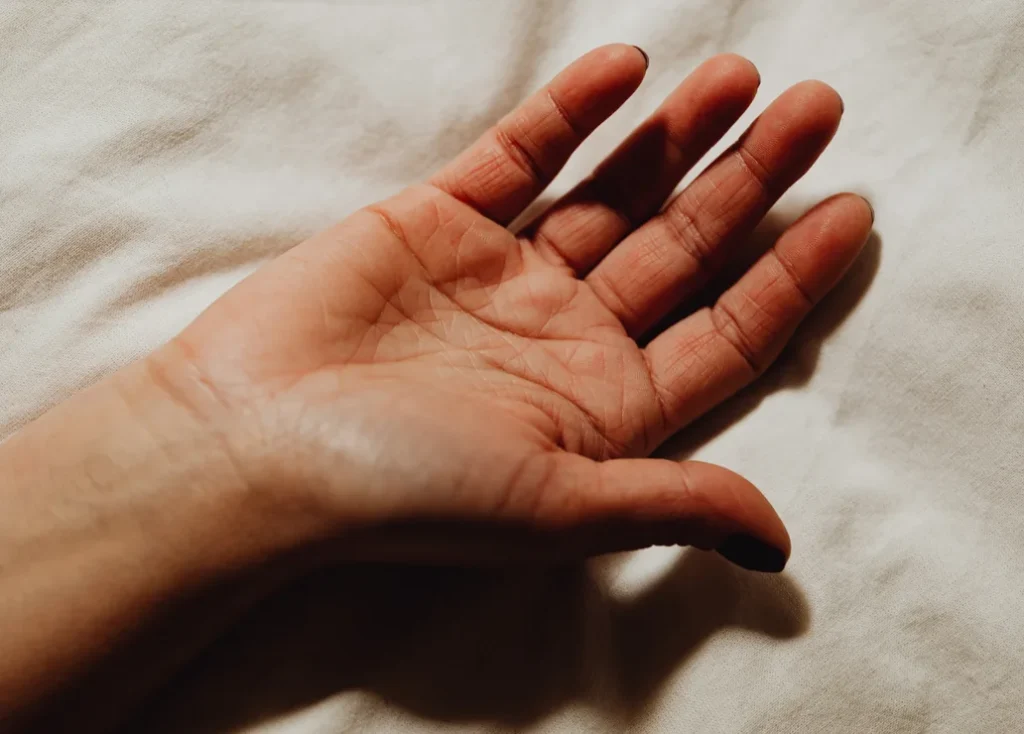
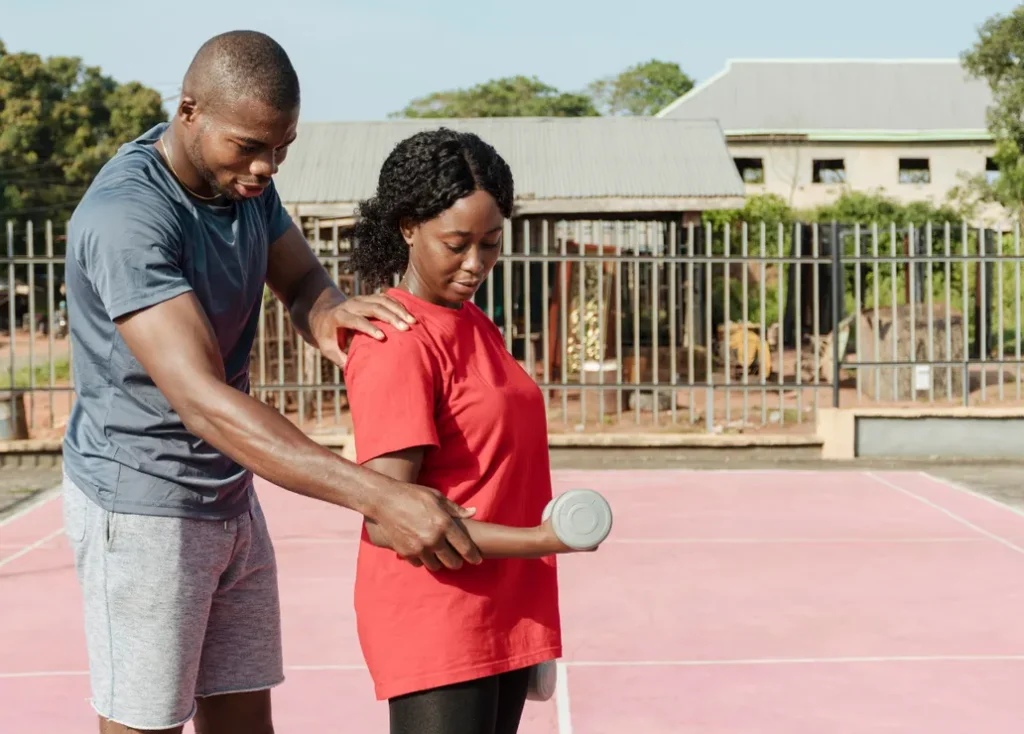
Rehabilitation focuses on improving hand strength, coordination, and functional movement while supporting nerve recovery. Therapy includes activities to enhance fine motor skills, grip strength, and hand control, as well as techniques to improve sensation awareness and hand use in daily tasks.
We also address pain management, joint protection, and adaptive strategies to support independence in self-care, work, and community activities. Our goal is to help clients regain functional hand use, improve safety, and enhance quality of life following nerve injury.
Our spinal cord injury rehabilitation program supports individuals who have sustained partial or complete spinal cord injuries, helping them regain mobility, independence, and functional abilities. We work with clients to maximize recovery, prevent complications, and improve quality of life after injury.
Rehabilitation focuses on improving posture, balance, transfers, mobility, and upper and lower limb function. Therapy includes exercises to strengthen muscles, enhance coordination, and maintain joint flexibility, as well as training in wheelchair use, adaptive techniques, and assistive devices to promote independence in daily activities.
We also provide guidance on safe transfers, pressure relief, and injury prevention to minimize secondary complications. Our goal is to help clients achieve the highest possible level of function, independence, and participation in home, work, and community life after a spinal cord injury.
Tetraplegia/quadriplegia, paraplegia, complete injuries, incomplete injuries, scoliosis, kyphosis, lordosis and other spinal deformities or conditions affecting mobility and function.
Our wrist drop rehabilitation program supports individuals experiencing weakness or inability to lift the wrist and fingers, commonly caused by radial nerve injury, stroke, or trauma. The program focuses on restoring wrist and hand function to improve daily activities and independence.
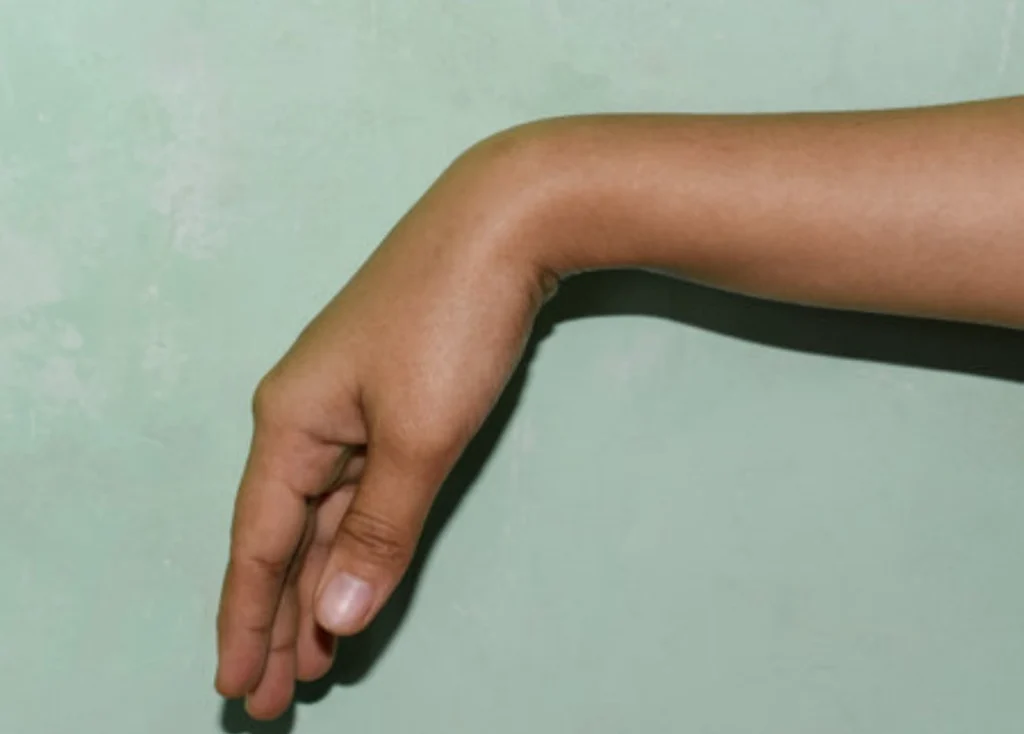
We use targeted exercises, splinting, and functional training to improve wrist extension, grip strength, coordination, and hand control. Therapy also addresses muscle strengthening, prevention of stiffness, and safe movement patterns to reduce the risk of further injury.
Clients are guided through practical activities to improve the use of the hand in self-care, work, and daily tasks, ensuring they regain as much function and confidence as possible.
Types of conditions we manage in wrist drop include: radial nerve palsy, post-stroke wrist drop, trauma-related nerve injuries, and other causes affecting wrist and finger extension.
Ability Therapy Place (ATP) is a leading Kenyan rehabilitation provider offering holistic, evidence-based therapy and inclusive support services to restore function, independence, and quality of life for individuals of all ages.
P. O. Box 1455-00200 Nairobi, Kenya. Muchai Drive off Ngong Road
Opposite Madina Mosque
Mon – Sat: 8 am – 5 pm
Sunday: Closed
Copyright © 2026 ability therapy place. Website by FixitPR.